
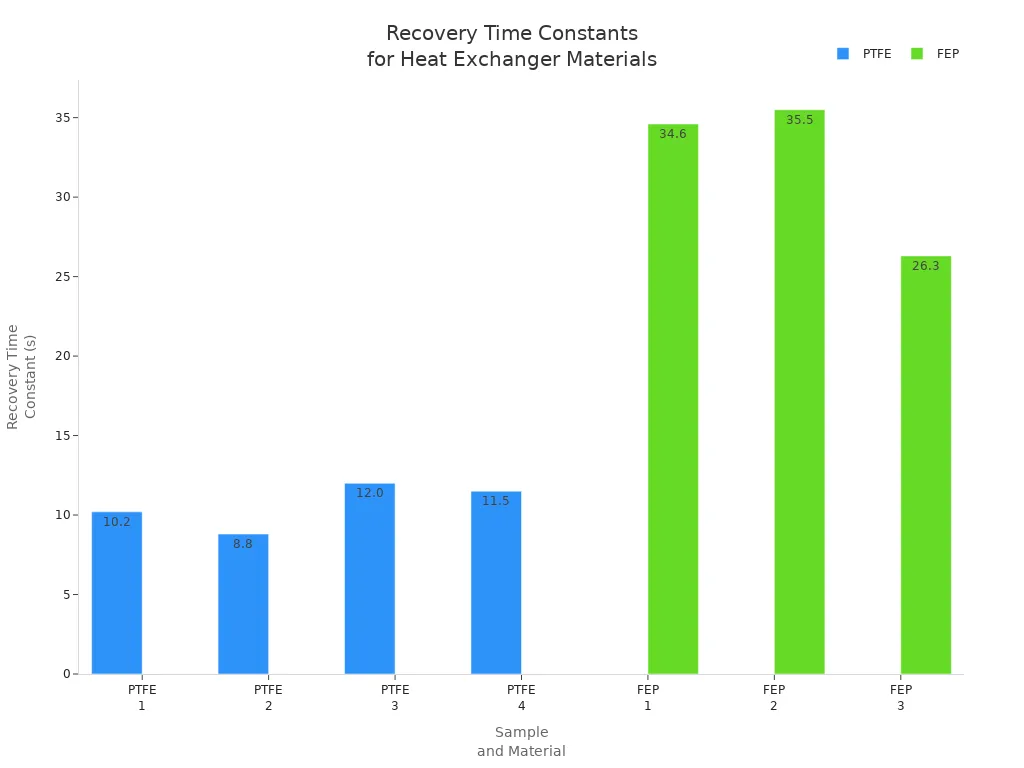
PTFE heat exchanger technology sets a new standard for efficiency in flue gas recovery. Engineers trust this material for its unmatched corrosion resistance and high thermal performance. The PTFE Heater exchanger maintains consistent operation even when exposed to aggressive chemicals and high temperatures. Recent data highlights its superior recovery time constants compared to other materials, as shown below:
| Material | Recovery Time Constant (s) at 70 °C | Statistical Significance |
|---|---|---|
| PTFE | 10.2, 8.8, 12.0, 11.5 | p < 0.05 |
| PEEK | Shortest recovery time | p < 0.05 |
| FEP | 34.6, 35.5, 26.3 | Not significant |
Challenges in Flue Gas Recovery
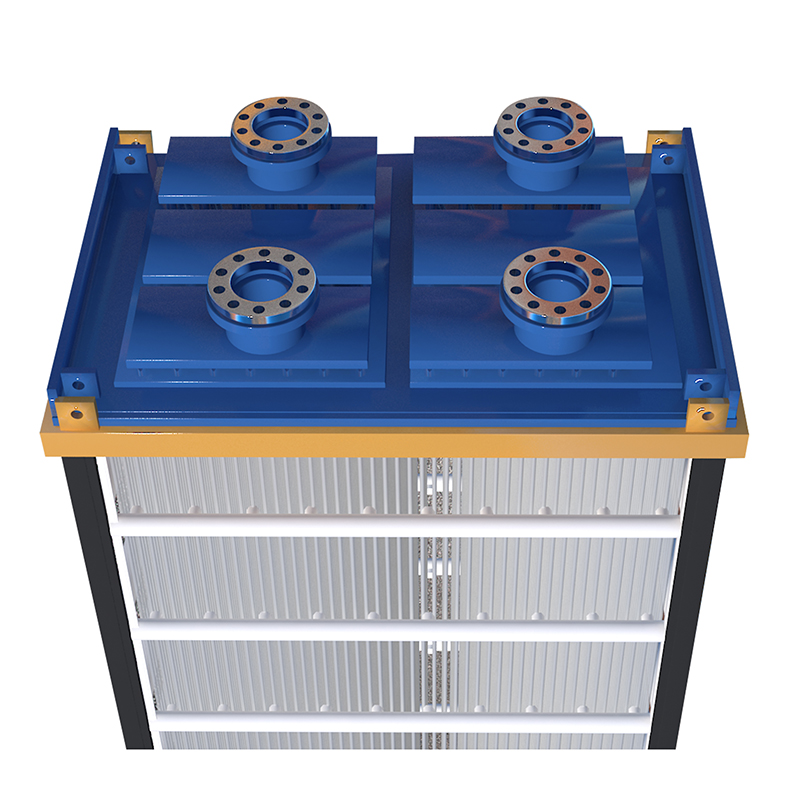
Efficiency Barriers in Flue Gas Systems
Flue gas recovery systems face several obstacles that limit their efficiency. Engineers must address these challenges to maximize energy recovery and maintain reliable operation. The most common barriers include:
·High Temperatures: Flue gases often reach extreme temperatures. Selecting materials that can withstand these conditions remains critical for system longevity.
·Corrosive Gases: Many industrial processes produce flue gases containing acidic components. These substances can attack conventional materials and reduce system life.
·Fouling and Blockages: Solid particles and dust in flue gas streams can settle on heat exchanger surfaces. This buildup decreases heat transfer efficiency and increases maintenance needs.
·Economic Viability: Operators must justify the investment in advanced materials and technology. The cost of corrosion-resistant systems can be significantly higher than standard options.
The acid dew point of flue gases presents a unique challenge. When flue gas temperatures drop below this point, acidic compounds condense and accelerate corrosion. This limitation restricts the amount of heat that can be safely recovered, especially when fuels contain sulfur. In many cases, the need for corrosion-resistant materials drives up system costs, sometimes by a factor of ten compared to carbon steel designs.
Corrosive Environment Impact
Corrosive substances in flue gas streams have a direct impact on the lifespan and performance of traditional heat exchangers. When flue gases cool below their acid dew point, acids such as sulfuric acid (H₂SO₄) and hydrochloric acid (HCl) condense on metal surfaces. This condensation forms a thin electrolyte film, which triggers electrochemical reactions that dissolve metal over time.
The consequences of this process include:
·Increased corrosion rates, especially with the presence of sulfur trioxide (SO₃)
·Loss of wall thickness and mechanical strength
·Formation of corrosion products that add resistance to heat transfer
·More frequent unplanned shutdowns for repairs
These factors combine to reduce system reliability and increase operational costs. PTFE heat exchangers address these challenges by offering superior resistance to corrosive attack and fouling, making them a preferred choice for demanding flue gas recovery applications.
PTFE Heat Exchanger Technical Design
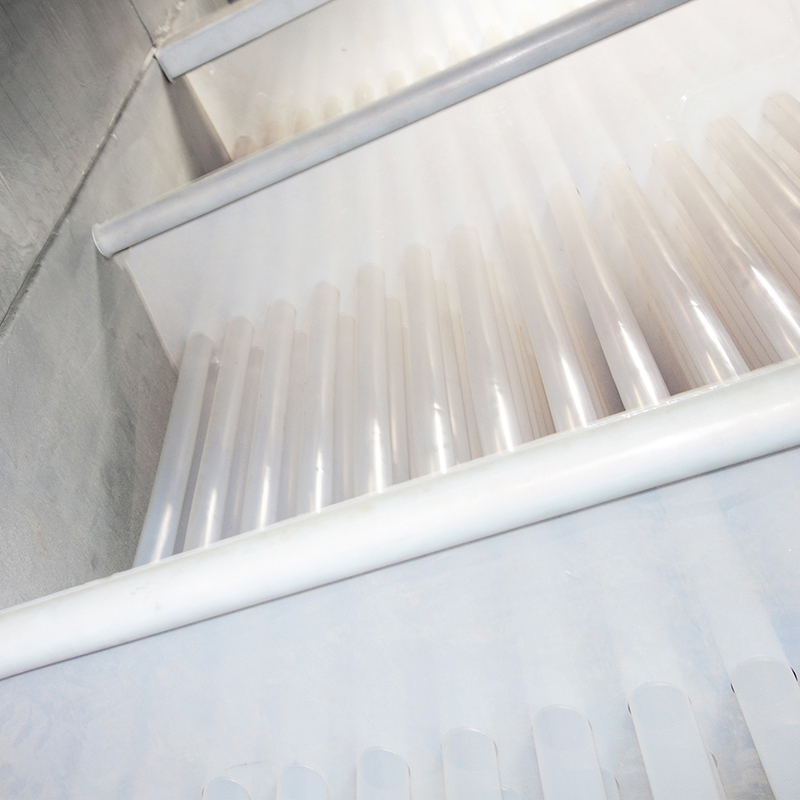
Corrosion Resistance and Chemical Stability
PTFE heat exchangers demonstrate exceptional resistance to corrosive environments. Engineers select PTFE for its ability to withstand strong acids, bases, and organic solvents. The smooth fluoroplastic Teflon (G-Flon) surface forms the primary barrier against chemical attack. This material resists degradation even when exposed to aggressive flue gases containing sulfuric acid or hydrochloric acid.
Note: The G-Flon foil lining protects the heat exchanger casing from condensing acids, which enhances durability and extends service life.
The technical design incorporates several features that improve corrosion resistance:
| Design Feature | Description |
|---|---|
| Smooth fluoroplastic Teflon (G-Flon) | Provides high corrosion resistance and is used in the construction of heat exchanger tubes. |
| U-tube configuration | Enhances the efficiency of heat transfer while maintaining structural integrity. |
| G-Flon foil lining | Protects the heat exchanger casing from condensing acids, contributing to overall durability. |
| Corrosion-resistant alloys | Used in areas subject to severe acid attack, improving longevity and performance. |
| Integrated water washing systems | Helps maintain heat transfer efficiency by cleaning surfaces and reducing fouling. |
PTFE heat exchangers outperform traditional materials in chemical stability. The table below compares resistance to corrosive agents:
| Material | Resistance to Corrosive Agents |
|---|---|
| PTFE | Excellent resistance to strong acids, bases, and organic solvents |
| PFA | Similar resistance but slightly better stability with strong oxidizers |
These features ensure reliable operation in harsh industrial conditions. Operators benefit from reduced maintenance and longer equipment life.
Thermal Performance and Heat Transfer
Thermal performance remains a critical factor in flue gas recovery. PTFE heat exchangers use advanced design elements to maximize heat transfer. The U-tube configuration increases the surface area available for heat exchange. Integrated water washing systems clean the tubes, preventing fouling and maintaining efficiency.
·PTFE exhibits low thermal conductivity, which makes it a good thermal insulator.
·This property requires careful engineering to achieve optimal heat transfer rates.
·Designers compensate by increasing tube surface area and optimizing flow patterns.
Engineers must balance insulation and heat transfer. PTFE heat exchangers deliver consistent performance by leveraging these design strategies. The result is efficient energy recovery from flue gas streams.
Mechanical Reliability and Structural Integrity
Mechanical reliability ensures safe operation under demanding conditions. PTFE heat exchangers withstand high temperatures and pressures commonly found in industrial flue gas recovery systems. Structural integrity depends on proper installation and support.
Tip: Independent support for piping and correct flange alignment prevent mechanical stress and failure.
Key considerations include:
·Unsupported piping can cause bending and torsional stresses.
·Thermal cycling combined with residual stress may promote crack growth.
·Best practices involve robust installation procedures and regular inspection.
PTFE heat exchangers maintain their structural integrity when engineers follow these guidelines. The combination of corrosion resistance, chemical stability, and mechanical reliability makes PTFE heat exchangers a preferred solution for flue gas recovery.
Material Advantages of PTFE Heat Exchanger
Chemical Stability in Harsh Conditions
PTFE heat exchangers deliver outstanding chemical stability in environments where other materials fail. Industrial flue gas recovery often exposes equipment to aggressive acids, bases, and organic solvents. PTFE resists these corrosive agents, maintaining its integrity even when exposed to sulfuric acid, hydrochloric acid, or other harsh chemicals. This stability ensures that the heat exchanger continues to operate efficiently, reducing the risk of leaks or failures. Operators in chemical processing, power generation, and waste incineration benefit from this resilience, as it minimizes the need for frequent replacements.
Note: PTFE’s non-reactive surface prevents chemical attack, which helps maintain consistent performance and protects critical system components.
Temperature Tolerance and Durability
PTFE heat exchangers can withstand continuous operation at temperatures up to approximately 260°C. This high temperature tolerance allows them to recover heat from flue gases that would quickly degrade other materials. However, operating near the upper temperature limit for extended periods can increase the risk of localized softening or microcracking. Repeated exposure to high temperatures may cause environmental stresses, which can result in bulging, crazing, or even rupture. For optimal durability, operators should monitor process conditions and avoid prolonged operation at maximum temperatures. When used within recommended parameters, PTFE heat exchangers provide reliable service and maintain their structural integrity over time.
Maintenance Reduction and Longevity
PTFE heat exchangers require less maintenance than traditional metal heat exchangers. Their chemical resistance reduces the frequency of cleaning and repairs, which translates to lower downtime and operational costs. The following table highlights the differences in maintenance requirements and expected service life:
| Aspect | PTFE Heat Exchangers | Metal Heat Exchangers |
|---|---|---|
| Maintenance Requirements | Reduced due to chemical resistance | Higher due to corrosion and degradation |
| Expected Service Life | Longer, often multiple years in corrosive environments | Shorter, requiring frequent maintenance |
Facility managers often choose PTFE heat exchangers for their long-term value. Key benefits include:
·Higher initial cost but justified by longer service life.
·PTFE can last up to five times longer in aggressive environments compared to metals.
·Reduced maintenance leads to lower downtime costs.
These advantages make PTFE heat exchangers a preferred solution for industries seeking reliable, low-maintenance heat recovery systems.
Thermal Design Considerations for PTFE Heat Exchanger
Heat Transfer Efficiency
Engineers consider several factors when designing PTFE heat exchangers for flue gas recovery. PTFE has a lower thermal conductivity compared to metals, which can limit heat transfer efficiency. This property requires careful attention during the design phase. Designers often increase the surface area of the heat exchanger or optimize the flow arrangement to compensate for this limitation. The adhesion of PTFE coatings to metal surfaces also plays a critical role. If the coating fails, hotspots may develop, which can reduce overall performance and reliability. Recent advancements in PTFE technology have improved thermal conductivity and enhanced integration with other materials. These improvements allow engineers to achieve better heat transfer efficiency while maintaining the chemical resistance and durability that PTFE provides.
Note: Proper installation and regular inspection help maintain optimal heat transfer and prevent performance loss in PTFE heat exchangers.
Fouling Prevention and Non-Stick Properties
PTFE stands out for its ability to resist fouling, which is a common issue in heat exchanger operation. The non-stick properties of PTFE offer several advantages:
·Non-stick coatings prevent the adhesion of fouling agents such as dust, ash, and chemical deposits.
·The low surface energy of PTFE makes cleaning easier and less frequent.
·Resistance to fouling helps maintain high operational efficiency and reduces maintenance downtime.
These features ensure that the PTFE heat exchanger operates efficiently over long periods, even in harsh industrial environments. Operators benefit from reduced cleaning requirements and more stable performance, which supports reliable flue gas recovery.
Mechanical Reliability in Industrial Applications
Pressure Handling Capabilities
PTFE heat exchangers deliver robust performance in demanding industrial environments. Engineers design these units to withstand the pressure fluctuations common in flue gas recovery systems. The unique properties of PTFE provide excellent resistance to mechanical stress. This material maintains its integrity even when exposed to rapid temperature changes and high-pressure differentials.
Industrial plants often experience pressure surges during startup and shutdown. PTFE heat exchangers absorb these stresses without cracking or deforming. The U-tube configuration and reinforced casing contribute to their mechanical strength. Operators rely on these features to ensure safe and continuous operation.
Routine inspections confirm that PTFE heat exchangers retain their shape and function over extended periods. The material resists fatigue, which reduces the risk of leaks or failures. This reliability supports uninterrupted energy recovery and minimizes unplanned maintenance.
Serviceability and Compact Design
PTFE heat exchangers offer significant advantages in serviceability and installation. Their compact design simplifies integration into existing plant layouts. Maintenance teams appreciate the reduced footprint, which allows for easier access during inspections and repairs.
Key benefits of the compact design include:
·Easier maintenance due to accessible components
·Reduced space requirements, ideal for crowded industrial settings
·Efficient thermal performance that supports operational goals
Gasketed plate configurations enhance serviceability. Technicians can quickly remove plates for cleaning or replacement. This feature minimizes downtime and supports routine maintenance schedules. The modular design also allows for scalability, enabling plants to expand capacity as needed.
Operators value the versatility of PTFE heat exchangers. The combination of compactness and ease of service ensures that these units remain a practical choice for modern industrial applications. Facilities achieve higher uptime and improved energy efficiency by adopting this advanced technology.
Real-World Performance and Case Studies
Efficiency Gains in Industrial Plants
Industrial plants have reported measurable improvements after installing PTFE heat exchangers in their flue gas recovery systems. Operators observed higher energy recovery rates due to the material’s resistance to fouling and corrosion. Plants that process sulfur-rich fuels often face rapid equipment degradation. PTFE heat exchangers maintain stable performance even in these harsh environments. Maintenance teams noted fewer shutdowns for cleaning and repairs. This reliability supports continuous operation and helps facilities meet production targets.
Plant managers also highlighted the role of PTFE heat exchangers in water recycling. The condensation recovery system captures water from flue gas, which can be reused for boiler feed or desulfurization processes. This approach reduces water consumption and supports sustainability goals. The combination of energy and resource recovery strengthens the overall efficiency of industrial operations.
Cost Savings and Return on Investment
Facilities that switched to PTFE heat exchangers documented significant financial benefits. The following outcomes have been observed:
·Average return on application investment of up to 10 times
·Significant reduction in fouling rates
·Lower cleaning frequency and maintenance costs
·Improved operational efficiency
These advantages translate into lower total cost of ownership. Reduced downtime and extended service life allow operators to allocate resources more effectively. Many plants reported that the initial investment in PTFE heat exchanger technology paid off within a short period. The long-term savings and operational improvements make this solution attractive for industries seeking to optimize their flue gas recovery systems.
Why PTFE Heat Exchanger Is the Optimal Choice
Comparison with Metal and Other Materials
PTFE heat exchangers stand out in industrial applications. Engineers often compare them with stainless steel and other materials. PTFE offers superior corrosion resistance. Acidic condensate from flue gas can damage metal surfaces quickly. PTFE coatings protect against this corrosion, ensuring longer service life. Stainless steel provides strong thermal conductivity and mechanical strength. However, it performs best in less corrosive environments. PTFE excels in harsh conditions where acids and aggressive chemicals are present.
Operators notice that PTFE heat exchangers require less maintenance. The material resists fouling and degradation. Maintenance teams spend less time cleaning and replacing parts. Although PTFE heat exchangers may cost more initially, they deliver greater value over time. Reduced maintenance and fewer replacements offset the higher upfront investment. Facilities benefit from reliable operation and lower total ownership costs.
Note: Proper thermal design and correct sizing are essential. Undersized units can experience increased fouling and thermal degradation. Engineers must assess capacity to prevent premature failures.
Key factors that make PTFE heat exchangers optimal:
·PTFE coatings protect against corrosion from acidic condensate.
·Resistant materials like PTFE enhance durability in harsh environments.
·Correct sizing prevents failures and maintains efficiency.
Long-Term Operational Benefits
Industrial plants report several long-term benefits after adopting PTFE heat exchangers. These units exhibit excellent corrosion resistance and high heat transfer efficiency. Energy optimization becomes easier as PTFE maintains stable performance. The material’s high thermal resistance and low friction coefficient support efficient operation across various applications.
Operators observe minimized water loss and reduced emissions. PTFE heat exchangers help facilities meet sustainability goals, especially in power generation and chemical processing. The technology aligns with industry standards for environmental responsibility.
Long-term advantages include:
·Consistent energy efficiency due to high heat transfer rates.
·Reduced maintenance and downtime.
·Support for sustainability through minimized water loss and lower emissions.
PTFE heat exchangers deliver reliable, efficient, and sustainable performance. Their advanced material properties and technical design make them the preferred solution for demanding industrial environments.
PTFE heat exchangers deliver unmatched efficiency in flue gas recovery by overcoming corrosion, maximizing heat transfer, and minimizing maintenance. The market for these solutions continues to expand, driven by stricter emission standards and their ability to handle harsh media:
| Market Trend | Application Strengths |
|---|---|
| 4.4% CAGR through 2034 | Handles acids, alkalis, salts, and chlorides |
Technical advancements, such as enhanced chemical stability and temperature resistance, ensure reliable, long-term performance. Operators also benefit from improved energy recovery and reduced carbon emissions, supporting plant sustainability.
·Enhances energy efficiency
·Reduces environmental impact
Post time: Apr-30-2026